Aging does not move at one speed
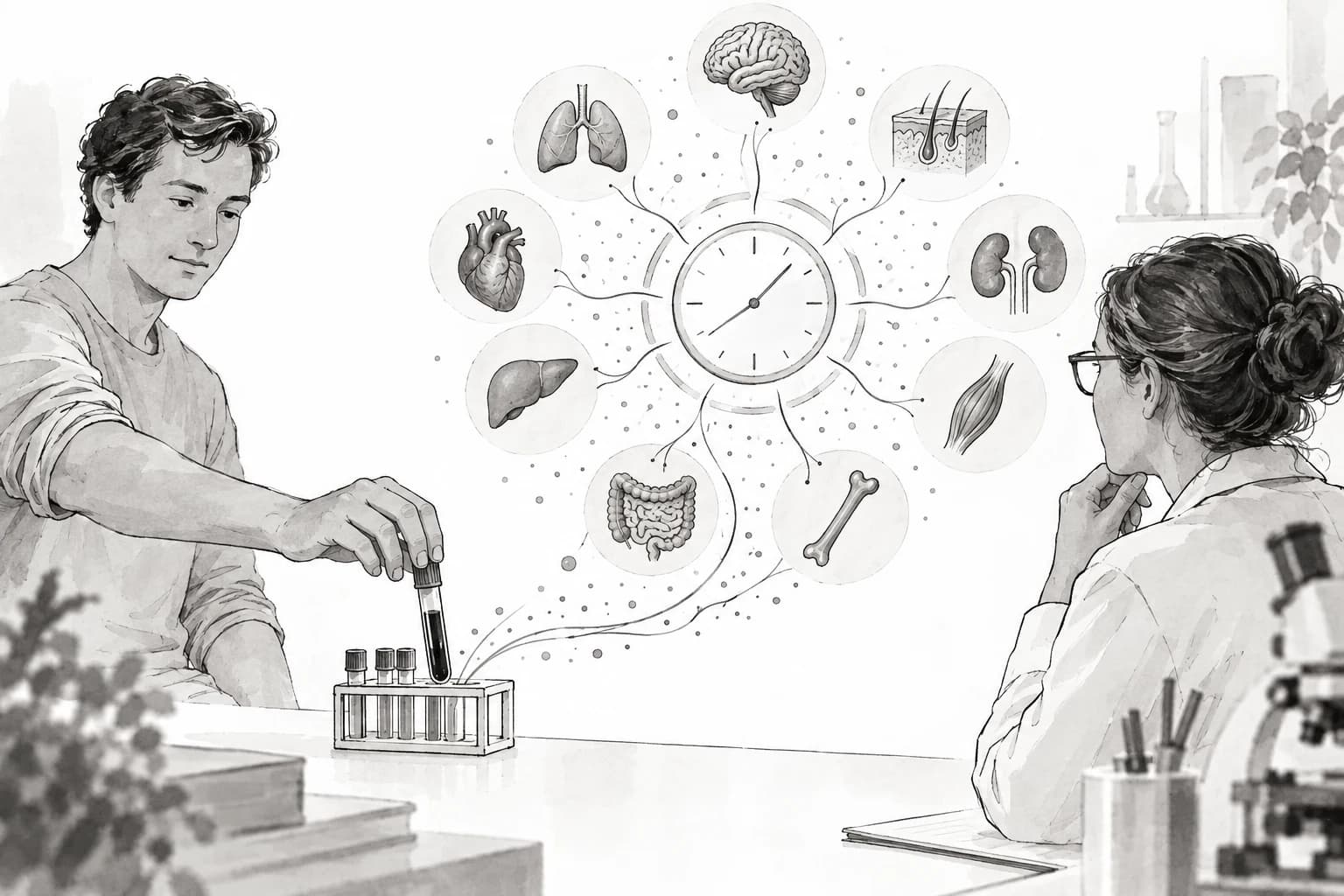
Two people of the same age can show very different changes in the heart, kidneys, immune system or metabolism. Systems Age was designed to describe that variation instead of compressing the body into a single biological-age number. [1]
The researchers first built scores from clinical measurements for 11 physiological systems. They then trained machine-learning models to estimate those scores from DNA methylation, chemical marks attached to DNA that can be measured in a blood sample. [1]
What the scores were compared with
The system-specific scores were tested against 14 age-related diseases and traits. For 10 of those outcomes, the score for the most relevant body system showed a stronger statistical association than three established epigenetic clocks. The combined score ranked first or second for 12 of the 14 outcomes. [1]
An association does not show that a score predicts what will happen to one person. The study evaluates relationships in research datasets, not decisions made in a clinic. [1]
What remains uncertain
The model does not cover every body system, and there is no single accepted way to assign clinical measurements to a system. Researchers also do not yet know why methylation in blood reflects changes elsewhere in the body. [1]
Longitudinal studies are needed to learn whether changes in these scores reliably track changes in health over time. The work does not show that choosing an intervention from a Systems Age result improves health or extends life. [1]
Sources & context
One peer-reviewed study. The archive and publisher link are routes to the same paper.
Systems Age: a single blood methylation test to quantify aging heterogeneity across 11 physiological systems
Seale and colleagues · Nature Aging · September 15, 2025